
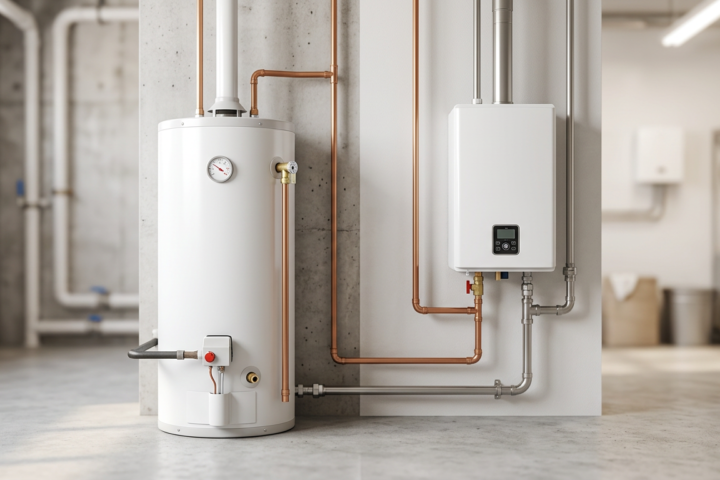
Choosing the right water heating system is an important decision for any homeowner. The debate between tankless water heaters and traditional storage tank systems continues to grow as more people look for efficient and long-lasting solutions. You can make a smart investment for your home if you know how each choice works and what it offers.
How Traditional Water Heaters Work
A tank in a traditional water heater holds a lot of hot water—usually between 30 and 80 gallons. The system heats the water and keeps it at a steady level so that it is always ready to use. It has been used for decades because this form makes it easy to use and reliable.
That being said, there are some limits. When the hot water tank runs out, you have to wait for it to fill up again and heat the water up again. This might be a pain for bigger homes or during times when a lot of people are using it at once. Another factor is the amount of energy used, since the system works all the time to keep the water at the right temperature, even when you’re not using it.
How Tankless Water Heaters Work
Tankless water heaters, also known as on-demand systems, heat water only when it is needed. Instead of storing hot water, they use powerful heating elements to quickly warm water as it flows through the unit. This means you get a continuous supply of hot water without worrying about running out.
Because they operate only when required, tankless systems are generally more energy efficient. They also take up less space, making them ideal for modern homes where efficiency and compact design are priorities.
Energy Efficiency and Cost Considerations
One of the best things about tankless devices is that they use less energy. They don’t lose heat when they’re not in use, like standard tanks do, because they don’t store water. This can save you a lot of money on your energy bills over time.
However, the upfront cost of a tankless water heater is typically higher than that of a traditional system. Installation may also require upgrades to electrical or gas lines. Traditional water heaters are more affordable initially, making them a popular choice for homeowners on a tighter budget.
When considering long-term value, tankless systems often last longer than traditional tanks, which can offset the higher initial investment.
Performance and Convenience
Tankless water heaters give you hot water all the time, which is great for big families or homes that use a lot of water. You can run multiple showers, appliances, and faucets without worrying about the supply running out.
Traditional systems, while dependable, have limitations in this area. Once the tank is empty, there is a waiting period before hot water is available again. For smaller households, this may not be a major issue, but it can become inconvenient in busy homes.
Maintenance and Lifespan
Both systems require regular maintenance to perform efficiently. Traditional tanks may need flushing to remove sediment buildup, while tankless units require periodic cleaning to prevent mineral deposits from affecting performance.
Tankless systems generally have a longer lifespan, often lasting up to 20 years with proper care. Traditional water heaters usually last between 8 and 12 years. Working with the best plumbers in Houston can help ensure proper installation and maintenance for either system, maximizing performance and durability.
Which Option Is Right for You
The choice between tankless and traditional water heaters depends on your household needs, budget, and long-term goals. If you value energy efficiency, continuous hot water, and a longer lifespan, a tankless system may be the better option. If upfront cost and simplicity are your main concerns, a traditional water heater can still provide reliable performance.
Conclusion
Both tankless and traditional water heaters offer unique benefits. Understanding their differences allows you to choose a system that fits your lifestyle and budget. With the right decision and proper maintenance, you can enjoy consistent hot water and improved comfort in your home for years to come.


